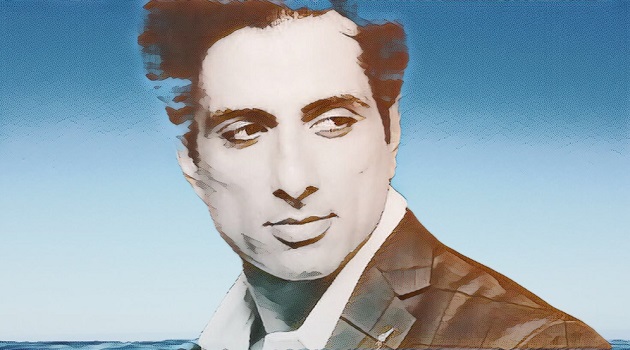
Some actors leave behind films. Some leave behind characters. And then there are those rare few who leave behind a little of themselves in the hearts of people who may never have met them, never shaken their hands, never known the sound of their laughter away from the camera.
Nana Patekar was one such man.
There was something about him that resisted easy description. He could be volcanic one moment and vulnerable the next; a man whose anger seemed to rise from some deep, restless place within him, yet whose silences could speak with the tenderness of a wounded heart. He could fill a screen with fury, command a room with a single glance, make an audience laugh with the sheer absurdity of a character, and then leave it sitting quietly with the ache of a life laid bare.
He was not an actor who merely wore his characters. He seemed, at times, to inhabit their wounds.
And perhaps that is why there was never just one Nana Patekar.
There was the actor. The soldier. The angry citizen. The son who remembered his mother’s words. The man who turned towards the distress of farmers. The public figure who questioned those in power, sometimes with a bluntness that unsettled as many people as it inspired.
He was, like the country he belonged to, a collection of contradictions.
And perhaps it is in those contradictions that his story deserves to be remembered.
The many lives of one actor
In Parinda, Nana Patekar gave violence a human face, frightening not merely because of what his character could do, but because of what seemed to be breaking inside him. In Krantiveer, his anger became the cry of a citizen who had run out of patience with injustice. In Prahaar: The Final Attack, he carried the discipline and physical intensity of a soldier. In Ab Tak Chhappan, he entered the morally murky world of an encounter specialist, where the line between duty and darkness was never easy to find.
And then came Natsamrat.
Here, the fire seemed to turn inward. The swagger of the formidable man gave way to the loneliness of an ageing artist, a father confronting estrangement, a human being discovering that applause cannot protect anyone from the quiet cruelties of time. There was a particular heartbreak in watching a man who could command an audience struggle to find his place in the world beyond the stage.
It was a reminder that the fiercest among us can also be the most fragile.
And who could forget Welcome, where that same intensity became comedy? Nana could make menace ridiculous, transform a pause into a punchline, and leave an audience laughing at a man who might have frightened it in another film.
His range was not simply a matter of playing different kinds of people. It was the ability to reveal the many shades of being human.
He did not always make his characters lovable. He made them live.
Perhaps that is the distinction between a performance that entertains us for an evening and one that follows us home.
Long after the screen has gone dark, certain characters remain. They return unexpectedly, in a line remembered, a gesture recalled, or a feeling we cannot quite explain. Nana gave Indian cinema many such moments.
His characters were sometimes angry, sometimes broken, sometimes absurd. But they were rarely forgettable.
A mother’s answer, and the wisdom of a simpler world
Of all the stories Nana shared about himself, one of the most tender was also one of the simplest.
As a child, he once asked his mother how Hindus and Muslims were different.
According to his recollection, she explained the difference through the gestures of prayer: Hindus joined their hands, while Muslims held their hands open.
That was the distinction she offered him.
Not a history of grievances. Not a catalogue of suspicions. Not a lesson in who belonged more completely to the country than whom.
Just two different ways of praying.
One can imagine how such an answer might settle into a child’s mind not as a grand philosophy, but as an ordinary truth, offered in the familiar voice of a mother. The world outside may build its walls, draw its boundaries and teach its children to be wary of one another. But in that small exchange, difference was neither frightening nor threatening. It was simply difference.
There is something achingly beautiful about that memory.
India has always been a land of many prayers, many names for the divine, many ways of expressing hope and grief. Beneath the rituals, the languages and the visible distinctions lies a shared human longing: for peace, for protection, for the well-being of those we love, for a tomorrow that is kinder than today.
A mother may not know that she is planting a seed that will one day be repeated before strangers. She may only be answering her child’s question as gently as she can.
Yet sometimes, years later, that small answer becomes a window into a larger truth.
Nana’s public positions were not always free of contradiction, and his life should not be polished into the story of a man who stood beyond every social and political fault line. But this memory deserves to be heard in its own quiet register.
It reminds us that the first lessons of coexistence are often learnt at home, long before the world teaches us how to disagree.
And perhaps the most difficult task before any of us is to hold on to that childhood simplicity when adulthood begins to make everything complicated.
The actor who crossed borders, even when the country drew lines
Nana Patekar belonged deeply to Maharashtra. Marathi was a natural home for his art, his language and his identity. Yet his performances were never confined by geography.
In Prakash Jha’s Apaharan, he played Tabrez Alam, a formidable figure in Bihar’s tangled world of politics, power and crime. He inhabited the character with such conviction that the audience could see the man without being distracted by the actor.
That was Nana’s gift, the ability to step into another world and make it his own.
Off screen, however, his views on migration into Maharashtra reflected a different instinct; one shaped by the politics of belonging and the son of the soil debate. It is an interesting contrast, though perhaps not an unusual one. An actor may cross borders effortlessly in his imagination while remaining deeply attached to the boundaries that shape his own sense of home.
There is no need to resolve that contradiction, or to turn it into a verdict on the man.
Perhaps what makes Nana Patekar interesting is precisely that he cannot be reduced to a single idea; not even the idea of an artist who transcends boundaries.
His work travelled. His convictions had their own geography.
And somewhere between the two lies the complexity of a man who, like most of us, was not always as expansive as his art.
The voice that refused to remain silent
Nana was never especially known for the soft cushioning of his words.
When he spoke about public life, his language could be sharp, his questions uncomfortable. In remarks reported during Maharashtra’s political debates, he challenged the apparent accumulation of wealth by elected representatives and questioned the burden borne by citizens who paid income tax and GST.
He asked why a corporator could appear to become extraordinarily wealthy soon after being elected, while allegations of corruption seemed to go unanswered. He questioned the fairness of citizens paying their dues while continuing to feel that the public services they received did not match their contribution.
These were his criticisms, not proof that every elected representative was corrupt. But the frustration behind them is familiar to millions of ordinary Indians.
There is the salaried employee who watches a portion of every month’s earnings disappear before the money reaches the bank account. There is the family that pays tax on its income and again on its consumption. There is the citizen who pays for roads, property and essential services, only to find that good healthcare, education and reliable public infrastructure may still demand another, often substantial, private expense.
The question is not whether a country needs taxes. It does. The question is whether citizens can see their contributions reflected in the dignity of the services they receive, the integrity of the institutions that govern them, and the accountability of those who exercise power.
There is a particular helplessness in feeling that the rules are strict for the ordinary citizen but negotiable for the influential. It is the feeling that one’s obligations are clearly defined while someone else’s accountability remains perpetually out of reach.
Nana gave voice to that frustration.
He did not always wrap his thoughts in the language of policy. He often spoke with the heat of indignation rather than the coolness of a committee report. But behind the bluntness lay questions that a democracy cannot afford to ignore.
A public figure’s voice has value not only when it praises the country, but also when it asks whether the country is living up to its promises.
Anger, by itself, cannot repair an institution. Nor can a speech replace evidence, due process or sustained reform. Yet silence is not the only alternative to imperfect protest.
Sometimes, the first act of accountability is simply to ask, in public, the question others have learnt to swallow.
The soldier beyond the screen
In Prahaar, Nana portrayed a soldier. But the discipline and the world of the armed forces were not confined to the role.
He underwent military-style training for the film, and his engagement with the Army continued beyond the demands of cinema. During the Kargil conflict in 1999, he visited the war front after approaching then Defence Minister George Fernandes. In later accounts, he spoke of spending around 60 days with Army personnel and being associated with a Quick Reaction Team. He subsequently received the honorary rank of Lieutenant Colonel in the Territorial Army.
His reported association with the forces should not be confused with a claim that he served as a formally deployed combat soldier. But the experience brought him closer to a reality that no performance, however convincing, can fully reproduce.
For the rest of us, war often arrives through a television screen: a map, a breaking-news banner, a solemn announcement, a name read aloud. We see the images, hear the statistics and return, eventually, to our ordinary lives.
For the soldier, there is no such distance.
There are nights that do not end when the camera cuts. There is the cold, the uncertainty, the waiting, the knowledge that a decision made in seconds may determine whether someone returns home. There are families whose ordinary days become long exercises in hope.
A film can honour that courage, but it cannot contain the whole of it.
Perhaps Nana understood something of this distinction when he stepped beyond the boundaries of a role and spent time with those who lived the reality behind it.
It is easy to admire courage when it has music behind it and a familiar face in the frame. It is harder to comprehend courage when it belongs to an unknown person standing somewhere far away, doing a duty that may never make the news.
That is the debt a country owes its soldiers: not merely applause, not merely ceremonial remembrance, but a lasting respect for the human beings behind the uniform.
For Nana, the Army was more than a cinematic costume. It became a part of his life beyond the screen.
When concern became work: the story of NAAM
There are many ways to express compassion. There is the moving speech, the public gesture, the photograph that tells the world we care.
And then there is the work that continues after the cameras leave.
In September 2015, Nana Patekar and fellow Marathi actor Makarand Anaspure spearheaded the NAAM Foundation in response to drought, farmer distress and the water crisis in Maharashtra. Its work has included water conservation, restoration of water infrastructure and initiatives intended to support rural communities.
The subject was not an abstract cause.
For a farmer, water is never simply a line in a government report. It is the difference between a crop that survives and a field that fails; between the hope of repayment and the fear of another debt; between a season of work and the uncertainty of what comes next.
When the rains do not arrive, the loss is not confined to the land. It enters the kitchen, the household budget, the education of children, the decisions of a family wondering how much longer it can hold on.
The distress of farmers is often discussed in numbers, and those numbers matter. But behind every statistic is a life that cannot be reduced to a column in a report.
NAAM sought to turn concern into practical intervention.
No philanthropic organisation can, on its own, resolve the structural challenges of Indian agriculture. Farmers need durable public policy, reliable infrastructure, sound water management, fair economic opportunities and institutions that remain attentive long after a crisis leaves the front page.
But the limitations of philanthropy do not diminish the value of action.
A restored water source can mean more than a visible project. It can mean a village better prepared for the next dry season, a farmer with another chance, a family with a little more room to hope.
There is something deeply human about this kind of work. It does not promise to solve every problem. It begins with the belief that one problem, in one place, can be made a little less cruel.
For all his screen presence, Nana’s contribution through NAAM may be among the most enduring parts of his public life. Here, the man known for his anger at injustice helped direct attention and effort towards people whose suffering could too easily be forgotten.
The actor could command an audience. The citizen could challenge authority. But the work of a foundation asks for something different: persistence, organisation and the willingness to keep returning to a problem after the applause has faded.
There is a quiet dignity in that.
Perhaps the truest measure of public influence is not how many people recognise a face, but whether that recognition can be used to make a difference in lives the public rarely sees.
The man behind the applause
Celebrity often comes with an elaborate architecture: the carefully constructed image, the carefully measured statement, the endless effort to remain admired.
Nana Patekar’s public persona often seemed to resist that architecture. He was associated with a comparatively simple lifestyle, a connection to farming and an impatience with some of the excesses of celebrity culture.
That image, too, should not be turned into mythology. He was a successful actor working within a commercial industry, a public figure with his own controversies and a man whose life cannot be understood through a single anecdote.
But he did not always appear interested in making himself easy to package.
There was something unvarnished about him. The voice could rise. The expression could harden. A sentence could arrive without the polished diplomatic wrapping we have come to expect from public personalities.
Sometimes that directness made him difficult. Sometimes it made him compelling. And sometimes, perhaps, it made him both.
We have a habit of asking those we admire to become perfect. We want the artist to be wise in every public statement, the philanthropist to be without contradiction, the citizen to hold every opinion we consider correct.
But a human life is not a public-relations document.
To remember someone honestly is to acknowledge both what they gave and what remains complicated about them. It is to celebrate a performance without pretending that the performer was infallible. It is to recognise an act of service without turning the person who performed it into a saint.
Nana’s life invites that more difficult form of remembrance.
We can admire the intensity he brought to his craft, recognise the work he supported beyond cinema, and still examine the positions he took in public life. These truths need not cancel one another.
Perhaps maturity lies in learning that gratitude does not require blindness, just as criticism does not require ingratitude.
And perhaps that is another reason he remains so difficult to place in a single category. He was not a neatly finished portrait. He was a man in whom several different truths existed at once.
There was a Nana for every kind of cinema
Nana Patekar’s filmography was a journey through very different emotional landscapes, revealing a different side of the actor with every role. In Parinda, he portrayed a man whose violence concealed a deeper darkness; in Krantiveer, he became the furious voice of a disillusioned citizen. Prahaar: The Final Attack presented him as a soldier shaped by discipline and duty, while Ab Tak Chhappan cast him as a policeman navigating morally grey territory. In Natsamrat, he was an ageing artist confronting the wreckage of his world, while Welcome revealed his remarkable comic timing, turning menace into laughter. Apaharan placed him in a drama of crime and political power, and Kaala showcased his work in Tamil-language cinema. Different films, different worlds, yet each added another dimension to the formidable screen presence we remember as Nana.
These are not separate boxes into which Nana can be neatly filed. They are glimpses of a talent that kept changing its shape.
One audience may remember the fury in his eyes. Another may remember the tremor in his voice. Someone else may recall a comic scene that still makes them laugh, years later, without any effort at all.
And somewhere, there will be a person who remembers him not through a film but through the work of a foundation, the story of a visit to soldiers, or a question he asked those in power.
An artist’s life continues in these different memories, each incomplete but each carrying something real.
No single audience owns the whole of an actor. No single role can contain the whole of a life.
The many Indias he leaves behind
India is too vast to have a single face. It is a country of crowded cities and quiet villages, of people who speak different languages, pray in different ways, carry different political convictions and imagine the future through different hopes.
It is also a country bound together by a thousand ordinary experiences: a mother’s answer to a child’s question, a family’s worry over the harvest, a citizen’s frustration with corruption, a soldier’s longing for home, a theatre falling silent at the end of a performance.
Nana Patekar’s life touched many of these worlds.
Through cinema, he gave anger a voice, grief a body and vulnerability a face. Through his public interventions, he questioned the conduct of those in power. Through his association with the Army, he moved beyond the imagined courage of a screen character towards the lives of people who serve. Through NAAM Foundation, he helped channel attention towards the distress of farmers and the need for water conservation.
He was not without contradictions. His positions were not always easy to reconcile. It would be too simple to remember only the parts of his life that fit comfortably into the story we wish to tell.
But perhaps the point of remembrance is not to produce a perfect man from the fragments of a real one.
Perhaps it is to look at those fragments honestly, to recognise what was extraordinary, to acknowledge what was complicated, and to understand why a life touched so many different people in so many different ways.
There are actors whose faces become familiar. There are performers whose dialogues become part of popular memory. And there are rare artists whose work gives us a language for feelings we have struggled to name.
Nana could make us furious, uneasy, amused and heartbroken. He could bring us close to a character we might otherwise have judged from a distance. He could remind us that beneath the uniforms, titles, accents and public reputations are human beings carrying their own private battles.
Perhaps that is why his legacy cannot be confined to a list of films or awards.
Somewhere, someone will revisit Parinda and remember the terrifying force of his performance. Someone else will watch Natsamrat and feel the loneliness of a life slipping away from the people it loves. Someone will laugh at Welcome. Someone will remember a question about taxes, a story about his mother, or the farmers whose lives NAAM sought to support.
Each will remember a different Nana.
And each will be remembering a part of the same man.
In the end, perhaps an artist’s life is not measured only by the applause that greets him while he is here, but by the feelings that remain when the applause has stopped. By the lines that return to us. By the characters we cannot forget. By the questions that refuse to grow quiet.
The screen may go dark. The theatre may empty. The lights may come up, revealing only rows of vacant seats.
But somewhere in the audience, a person will carry a little of what they witnessed back into the world.
That is the peculiar immortality of an artist: not that he remains untouched by time, but that something he created continues to live in the hearts of people he will never know.
There was a Nana Patekar for every kind of cinema.
And, in his own fierce, tender and complicated way, there was a Nana Patekar for every kind of India.
Divya Dixit

Likes to follow political happenings in India & across the world. Cares for women & children. Concerned about poverty across the continents.