Some men come to a country as correspondents.
A rare few arrive as listeners.
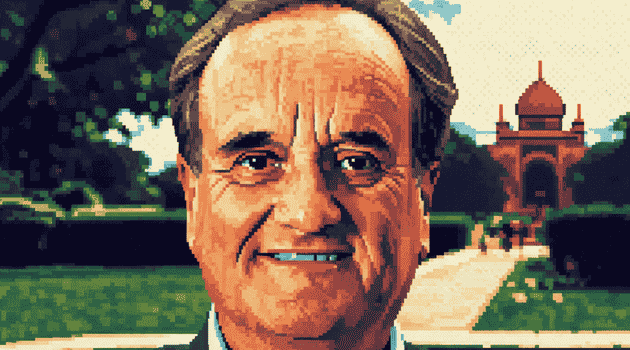
Sir Mark Tully came to India as the latter, and in listening to her long silences, her contradictions, her prayers and quarrels, he learnt how to tell her story without shouting over it.
When India entered the 1990s; bruised by the assassination of Rajiv Gandhi, shaken by economic crisis, caught between liberalisation and loss, tradition and impatience, it was Mark Tully who resisted the temptation of spectacle. He did not reduce India to headline drama. He slowed her down.
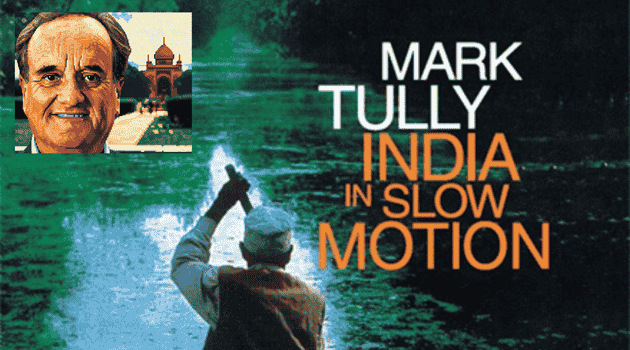
India in Slow Motion was not merely a book. It was an argument against haste, against the Western impatience to “explain” India in quick, consumable frames. Tully understood that India does not reveal herself to those who rush her. She reveals herself to those who wait.
What made Mark Tully extraordinary was not that he was British writing about India, but that he never wrote over India. He allowed her voices, villagers, priests, politicians, traders, mourners, to interrupt his own. His journalism had the humility of good anthropology and the moral seriousness of Nehru’s civilisational gaze; curious without condescension, critical without contempt.
In an era when post-liberalisation India was being flattened into growth curves and GDP graphs, Tully reminded us that progress without social conscience is merely speed. He saw the cost of reform on the poorest, the quiet erosion of institutions, the danger of importing modernity without adapting it to Indian realities. He warned not as an ideologue, but as a friend who had stayed long enough to care.
For aspiring journalists, Mark Tully leaves behind a rare lesson: that credibility is earned not by proximity to power, but by proximity to people; that reporting is not performance; that neutrality does not mean moral emptiness.
For readers, he leaves behind something rarer still a record of India written with affection but not illusion, intimacy but not indulgence.
In a time when journalism increasingly rewards speed, outrage, and certainty, Sir Mark Tully belonged to an older, almost endangered tradition: the reporter as witness, not judge; the writer as bridge, not brand.
He chose India.
And in doing so, he allowed India to choose her own voice.
That is why he will be remembered not as a foreign correspondent who covered India, but as a chronicler who understood that this country moves, thinks, grieves, reforms, and survives… in slow motion.
Divya Dixit

Likes to follow political happenings in India & across the world. Cares for women & children. Concerned about poverty across the continents.